 CHICKENBANANALAB
These days, we hear the term 'cloud' a lot. Saving photos to the cloud with a smartphone and using cloud-based collaboration tools at work have become natural. However, if you're asked, 'What exactly is the cloud?' many people often hesitate, saying, 'Well… it's something you do over the internet…' There's no need to overthink it. The concept of the cloud is much simpler and closer to us than you might imagine.
Cloud: The Convenience of Using It As Your Own, Even When It's Not
Cloud, in short, refers to the concept of renting necessary IT resources via the internet, instead of directly installing and managing them on your own computer or company server. It's similar to using a water purifier rental service to get the water you need, rather than buying and maintaining one yourself. How convenient would it be if you didn't have to own or manage the purifier, and the company took care of filter changes and repairs?
Cloud computing is no different. Instead of purchasing, installing, and managing IT resources like servers, storage space, software, and networks directly, you rent resources from cloud service providers (CSPs) that are set up in data centers worldwide, all accessible over the internet. A major advantage is that you only pay for what you use, and you can easily scale resources up or down as needed, offering great flexibility.
So, Why Do We Need Cloud Computing?
In the past, if a company wanted to create a new service, it had to buy servers, set up networks, and install operating systems or software itself. This process could take weeks to months, and the initial investment costs were substantial. Moreover, if user numbers suddenly increased, leading to insufficient servers, the company would have to go through the complex process all over again. Conversely, if user numbers dropped, expensive purchased servers would sit idle, leading to inefficiency.
Cloud computing resolves these challenges. You can rent necessary resources with just a few clicks, significantly saving time and money. If traffic suddenly surges, resources can be flexibly expanded, and costs can be reduced by scaling down when not in use. Notably, for 2026, cloud cost optimization and efficient operations, often managed through FinOps practices, remain key trends, with organizations increasingly prioritizing automation and greater control over cloud resources.
Various Cloud Services Around Us
Cloud services can largely be categorized into three forms. It's easy to understand if you think of it like a pizza shop: ordering a ready-made pizza (SaaS), renting ingredients and a kitchen to make a pizza (PaaS), or simply renting the building space that has a kitchen (IaaS).
- SaaS (Software as a Service): This is the most common cloud service we encounter. It's a form where you use specific software directly via an internet connection without installing it on your computer. Google Drive, Microsoft 365, and Naver MYBOX are typical examples of such services. It's convenient because you don't need to worry about software installation or management.
- PaaS (Platform as a Service): This service allows you to rent an environment (platform) for developing and running software. It helps developers focus directly on development within a cloud environment, without needing to build operating systems, middleware, or runtimes themselves. Services like Google App Engine fall into this category.
- IaaS (Infrastructure as a Service): This service involves renting virtualized IT infrastructure such as servers, storage space, and networks. You can flexibly use computing resources as needed without buying physical servers, much like operating your own data center over the internet. Amazon AWS's EC2 and S3 are representative IaaS services.
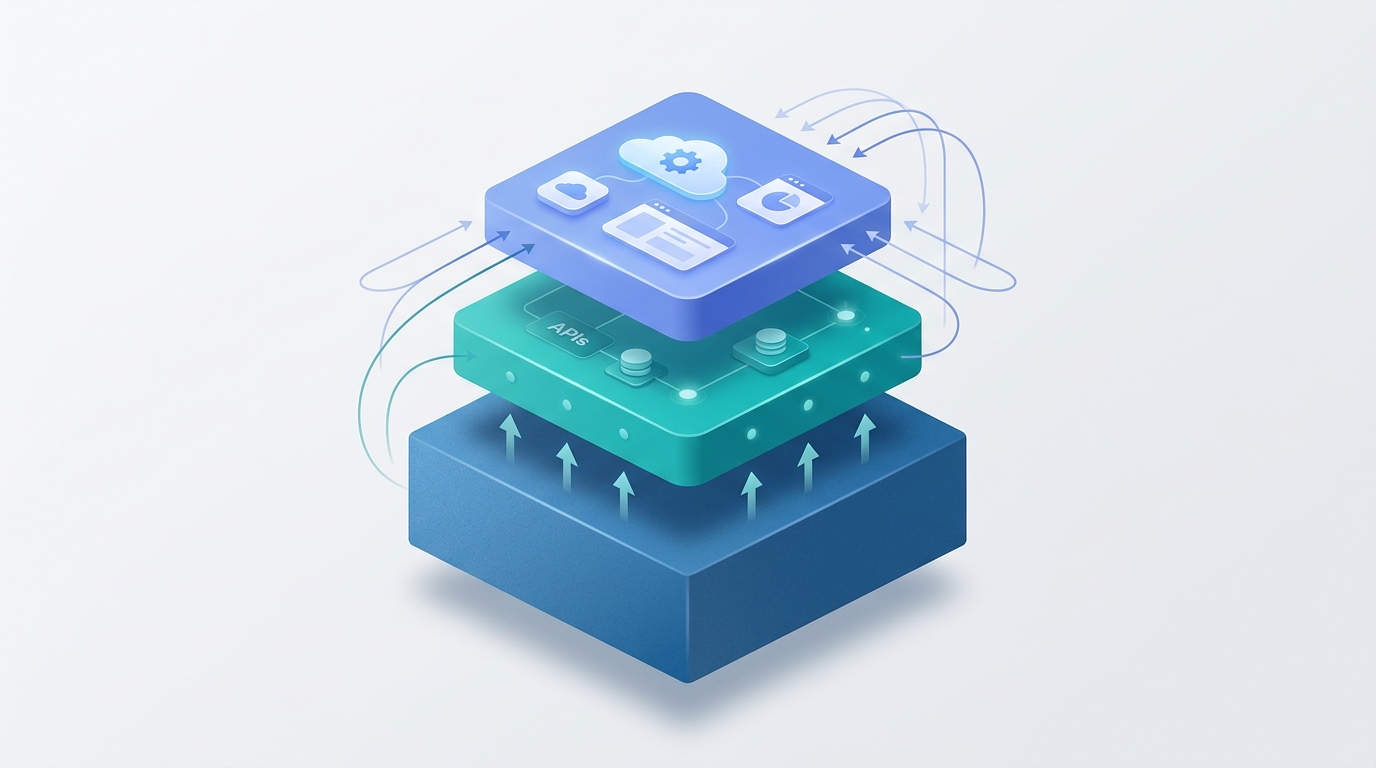
Three main models of cloud services: IaaS, PaaS, SaaS
Public, Private, and Hybrid Cloud
Cloud computing is also categorized based on who owns and operates it.
- Public Cloud: Services like Amazon Web Services (AWS), Microsoft Azure, and Google Cloud (Google Cloud) provide IT resources over the internet to the general public or businesses. Multiple users share resources, and you pay only for what you use.
- Private Cloud: A cloud environment built and operated exclusively for a specific company or organization. It's typically installed in an internal corporate data center, offering greater control over security and regulatory compliance.
- Hybrid Cloud: This approach combines public and private clouds. For example, sensitive data might be stored in a private cloud, while large-scale traffic handling utilizes a public cloud, allowing for flexible operation. In the 2026 cloud market, hybrid and multi-cloud strategies, alongside the deep integration of AI technologies, are emerging as core trends.
Cloud: Remember These Important Points
While cloud computing offers many conveniences, there are a few important considerations.
You need to pay attention to security and data management
As your data is stored on the cloud service provider's servers, security and personal data protection are always critical issues. While cloud providers invest heavily in security, it's crucial for users to proactively verify and manage basic security settings like data encryption and access control. Concerns about data breaches due to AI-based attacks are also increasing, making enhanced cloud security a continuously vital area.
Important security considerations in a cloud environment
Cost management is also important
Behind the convenience of paying only for what you use, it's important to remember that unexpected overages can occur. Cloud service pricing models can be complex, requiring regular monitoring and management of which resources are being used and how much. It's good practice to meticulously check for any unnecessary active servers or storage spaces.
Also consider the possibility of service interruption
Cloud services ultimately rely on the internet and servers, so there can occasionally be risks of service interruptions or data loss. While cloud providers strive to offer high availability and stability, it's wise to develop a backup strategy for critical data or consider a multi-cloud strategy using multiple cloud providers as a contingency.
Cloud Continues to Evolve
Cloud technology is constantly advancing, extending beyond simply renting IT infrastructure to integrating with cutting-edge technologies like artificial intelligence (AI), big data, and the Internet of Things (IoT). Recently, AI-powered services are expected to be offered even more actively through the cloud, with businesses leveraging AI-as-a-Service (AIaaS) to utilize AI capabilities without needing their own extensive infrastructure.
Ultimately, the cloud is not a specific technology or equipment itself, but rather a 'service model' that helps us utilize necessary resources flexibly and efficiently. Why not continue to pay attention to what new conveniences the cloud will bring to our lives and businesses in the future? It will be crucial to choose appropriate cloud services based on your situation and manage them wisely.
Comments
0 comments