 CHICKENBANANALAB

If you're interested in IT or work in development, you've likely heard terms like 'cloud' or 'AWS' frequently. However, when asked 'What exactly is AWS?', many might find themselves puzzled. While complex terminology can make it seem daunting, it's actually one of the services that makes many aspects of our lives more convenient.
AWS: What Kind of Service Is It, Anyway?
Simply put, AWS (Amazon Web Services) is a comprehensive collection of various cloud computing services provided by Amazon. It operates on a model where you rent everything necessary for IT infrastructure—such as servers, data storage space, databases, and networks—over the internet, and pay only for what you use. In the past, building such infrastructure required purchasing servers directly, setting up networks, and hiring personnel to manage them. With AWS, you can entrust all these processes to Amazon, allowing you to focus on service development or business growth.
You might be surprised to learn how many websites and applications operate on AWS. It's much easier to understand if you think of it like this: just as we don't generate our own electricity but receive it from power companies, we rent IT resources from AWS instead of building them ourselves.
What Are the Benefits of Using the Cloud?
There are numerous advantages to using cloud services like AWS. Here are some key benefits:
- Cost Efficiency: Initial investment costs for purchasing and managing servers directly are eliminated. The pay-as-you-go model helps reduce unnecessary expenses. While usage spikes can increase costs, a significant advantage is the flexibility to adapt to unpredictable traffic fluctuations.
- Flexibility and Scalability: If user traffic suddenly surges or a new service is needed, you can increase or decrease server or storage capacity with just a few clicks. For instance, if traffic spikes only during an event period, you can scale up servers then and scale them back down afterward for efficient operation.
- Global Infrastructure: With data centers located across the globe, AWS can provide fast and stable services anywhere in the world. When you want to offer better services to customers in a specific region, you can deploy your services to an AWS Region close to that area.
- Stability and Security: Amazon employs numerous experts to thoroughly manage the physical and network security of its data centers. While security incidents can still occur due to user misconfigurations, the baseline security provided by the cloud provider is very high.
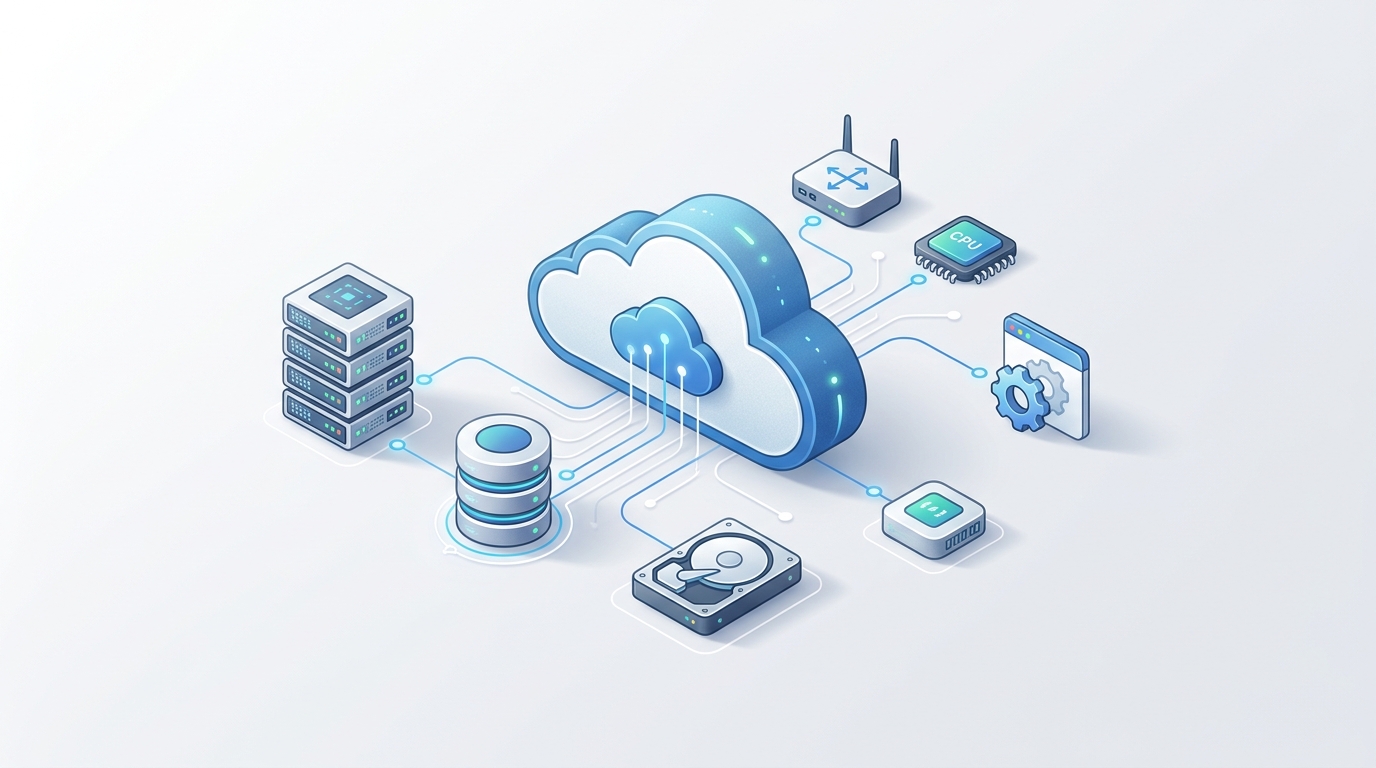
Building Flexible and Scalable IT Infrastructure with Cloud Services
AWS: Here Are Some Key Services!
AWS offers a vast array of services, but understanding a few of the most popular and commonly used ones can help you grasp the core concepts.
- Amazon EC2 (Elastic Compute Cloud): Think of this as a virtual server. You can rent virtual computers with the necessary CPU and memory, making them suitable for various purposes like web servers or application servers.
- Amazon S3 (Simple Storage Service): This is an internet storage service. It allows you to securely store all types of data, including files, photos, and videos, and access them anytime via the web. It's frequently used for storing website images and videos.
- Amazon RDS (Relational Database Service): This is a relational database service. It helps you easily set up and manage various types of databases, such as MySQL, PostgreSQL, and Oracle, reducing the complexity of database administration.
Beyond these, countless services exist for machine learning, artificial intelligence, big data analytics, Internet of Things (IoT), and more, and AWS continues to develop these offerings.
Important Considerations When Using the Cloud
While using AWS offers great convenience, there are a few points to be aware of. Cost management and security, in particular, always require attention.
How to Avoid Unexpected Billing Surprises?
Because AWS uses a usage-based billing model, leaving unused resources active or experiencing unexpected traffic can lead to higher-than-anticipated charges. It's crucial to make it a habit to regularly check and terminate unnecessary resources and to utilize budget alert features for continuous monitoring of your billing status.
Data Security: User Responsibility is Key
While AWS provides robust security systems, security in a cloud environment follows a ‘shared responsibility model’ between AWS and the user. This means AWS is responsible for the security of the physical infrastructure, but the security of user data and configurations is the user's responsibility. For example, security incidents often occur due to incorrect S3 bucket settings exposing data externally, or compromised access keys. In fact, many major AWS-related security incidents in the past have stemmed from customer-side configuration errors. It is extremely important to regularly remove unused access keys and strictly adhere to the principle of least privilege. Recently, Apple has also requested improvements to data deletion processes for terminated accounts, and such cases underscore that user understanding and attention to data management policies and security settings are essential.
Services are also continually improving to provide more flexible user management and security. For instance, AWS IAM Identity Center's session duration has been extended to up to 90 days, so leveraging these updates is a good practice.

Checking cost and security settings in the AWS console
In summary, AWS is becoming an essential service in the era of cloud computing. While it may seem complex and challenging at first, as you learn more, it can significantly empower your business or personal projects. Rather than trying to master everything at once, we recommend starting with frequently used services and gradually expanding your knowledge. AWS official documentation and various online courses can help you get started easily.
Comments
0 comments